
My older brother texted me that a family member had died, a cousin. She was the daughter of my uncle in Colorado. We traded texts about her. I texted that she’d led a long, fruitful life, my brother responding with, “It’s an impressive family, and she was a star in it.”
His comment illuminated his feelings about family and the way individuals existed in it. His family was a club, a tribe, one that succeeded or failed based on the efforts of its members. My first reaction was to see her as an individual. My brother quickly moved to her place within the family.
Why were our perspectives so different?
That same day my mom texted me that she had purchased her grandmother-of-the-groom dress for my son’s upcoming wedding. We were both happy. But she was happy differently from me. She was happy about the tribe. I was happy for my son.
I think I reacted differently because being part of the tribe had not been a particularly positive experience for me.
My natural inclinations, succeeding at school, work, writing, and in sports, did not position me well within my tribe. While those things weren’t inherently bad, for a daughter of my tribe they simply didn’t bring value. That I cared little for other things that did bring value to this tribe—cooking, cleaning, dolls, Southern Baptist hymns, farm work, being pretty (not my choice to make on that one)—weakened my position further.
Our study of community and how it works helps me understand something I couldn’t understand then: why excluding me made sense from the tribe’s point of view. I was excluded from my tribe, my home community, for the sake of its health.
That’s not a judgment about me or about the tribe. It has nothing to do with who was right or wrong. I’m talking only about the health of that particular tribe as a tribe.
Al Qaeda is a healthy tribe. Southern Baptists are a healthy tribe. CrossFit is a healthy tribe. NRA members are a healthy tribe. Moral rightness or wrongness has nothing to do with tribal health. We are discussing the tribe, not the morality of it.
By the way, yes, I’m going to use the word “tribe” (look, I just did it again). Now that I am mostly retired, I use such words with impunity. It’s fun. “Tribe” is the right word. Sociologists everywhere are pursing their lips and nodding their heads up and down in agreement. The Southern sociologists are saying, “Yeah girl, go on,” in their own tribal language. People bearing the weapon I call the Woke Stick are unhappy with my usage.
Why use the word tribe if it’s going to ruffle so many feathers? Because the word “community” has been unicorned and butterflied so that it is worthless, vacuous. The word “tribe” implies system, method, process, rules.
Tribes require exclusion. While not driven out and exiled, my childhood tribe excluded me. (I excluded myself too, but that’s a different psychological process.) Members of my childhood tribe needed to know that the people inside the group believed largely the same things. While there can be some differentiation around the edges, the beliefs and values that define the tribe must be largely shared for the tribe to maintain good health.
When everyone in the tribe shares the beliefs and values that matter most, trust is inspired. Fear is diminished. People are comfortable. They feel safe. They feel like everyone knows the rules and follows them. Contentment reigns.
I didn’t fit.
This raises the question, how does ANY change happen?
We’ve written about societal tipping points. They happen when enough pressure builds beneath the surface that an idea finally breaks through into the community. In my home community at the time I grew up, people like me mostly just left. The community was uncomfortable and so were we. Leaving also gave many of us the ability to reframe our home community with nostalgia, so that we could visit and be accepted for a limited time, like at holidays.
And yet change still happened, even with dissenters like me often removing ourselves and leaving a more concentrated body of people in agreement. How did anything ever change?
Over time, though, more people begin privately questioning the tribe’s norms. That creates pressure from underneath. More and more people begin to hold different beliefs like, “We are going to keep bourbon in a sideboard in the dining room, not under the bathroom sink.” Over time, these incremental changes move the community’s standards.
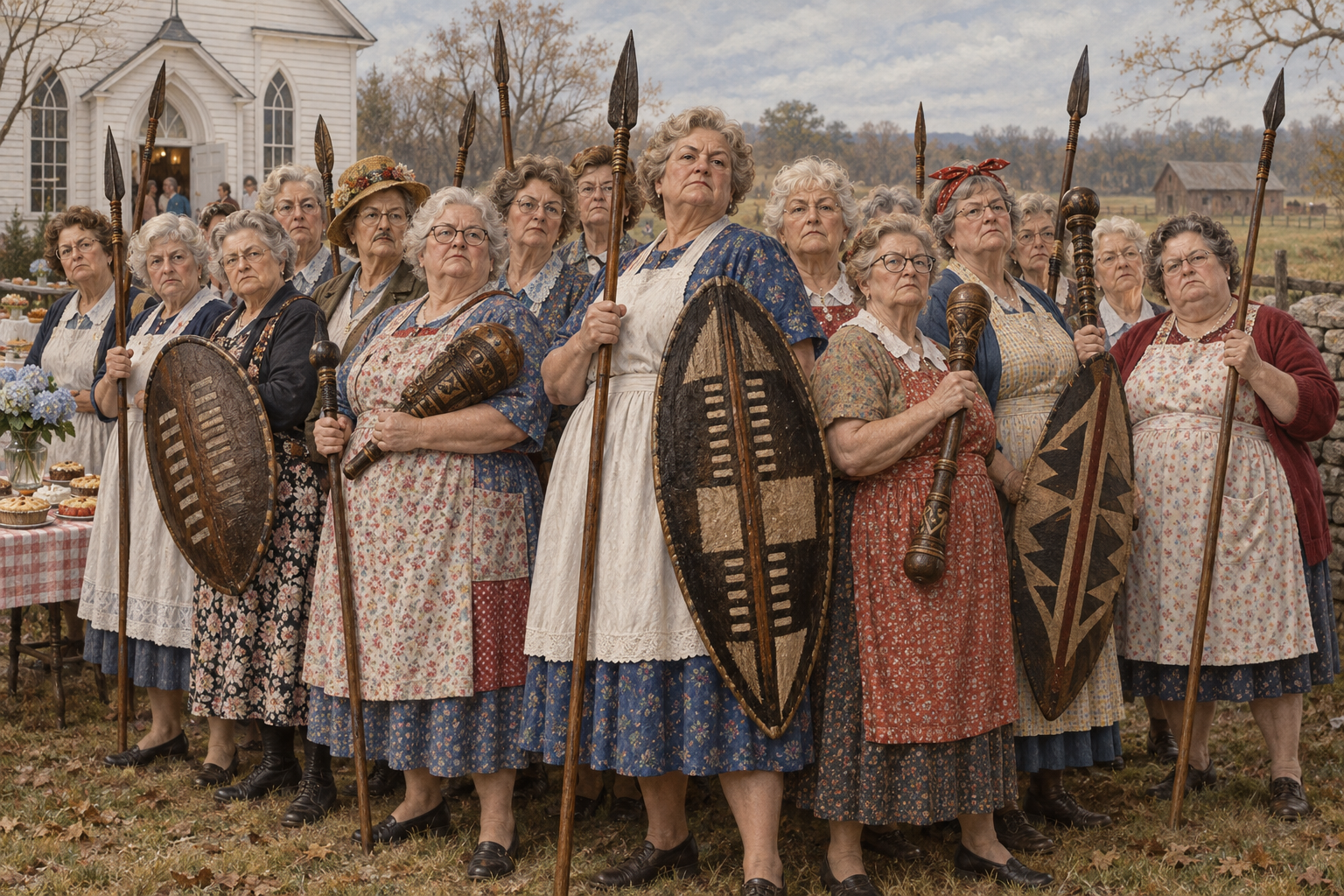
Sometimes, societal pressure builds to the point that a big change happens, like acceptance of gay marriage. That seemed to come out of nowhere, but it didn’t. The pressure built for a long time underground. Eventually even the old white church ladies were saying things like, “God don’t make no mistakes. Love everyone.”
That’s pressure.
And, as we’ve seen in the past decade, some communities have started to resolidify and try to reconstitute their old form. They have begun to exclude those who don’t fit. MAGA, we see you though you have changed your uniform.
As an example, some American communities do not hold dear racial and sexual equality. While their out-loud narrative may say something different, their actions scream, “I want my old community values back in place. I want people of color and women back in their places.” Then laws constraining ability to vote and bodily autonomy show up.
What is most fascinating about tribes is that most members don’t know what is driving their beliefs or actions. These mechanisms are largely unconscious. The tribe members know how they feel. Then they make up a story that explains why they feel that way.
The tribe member’s most gullible listener to that constructed narrative is themself.