
Anonymity Changes People
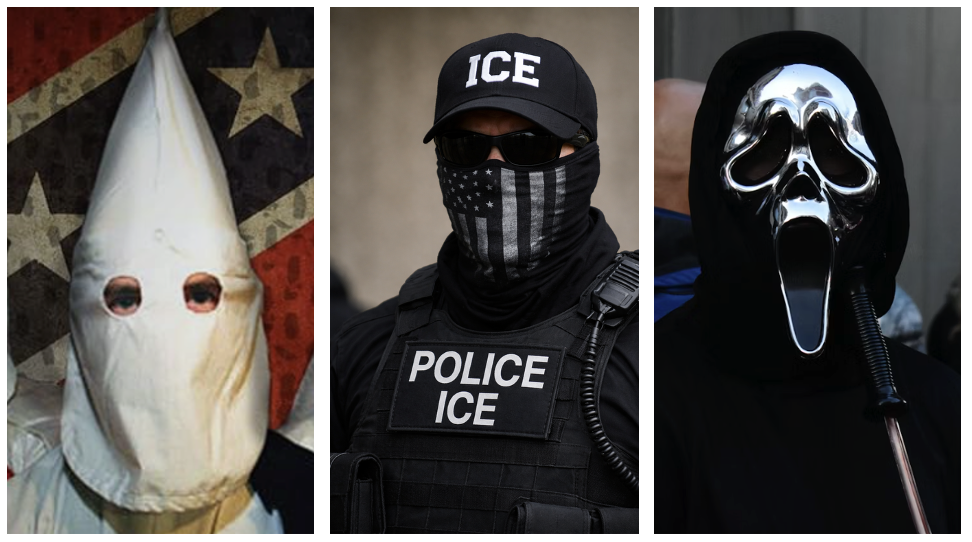
The public reaction to masked ICE agents isn’t just political, it’s psychological.
Anonymous means “unidentified.” The key word: identity. Being anonymous means your identity is disconnected, untethered from consequence.
Un-identity-fied.
Are you Christian? Muslim? Jewish? A parent? Peace loving? If you’re anonymous, you’re not held to any of those identities. You don’t have to hold yourself to anything, and neither can anyone else.
Picture two male law enforcement officers.
One stands in your neighborhood wearing a visible name badge. He knows you know him, or could. His various identities probably include: law enforcement officer, dad, friend, husband, weekend sports warrior, community volunteer, etc.
Both you and he are holding him to the attributes of his identities.
The second officer wears a full mask and no identifying information. No badge, no name. He is anonymous, unidentified. The pull of those identities weakens.
You feel the difference immediately. So do they.
When identity is visible, behavior carries weight and consequences, internally and externally. A complaint or an accusation can follow you home. You will have to face your own behaviors. Behavior at odds with your identity creates conflict in yourself, friction. That possibility shapes behavior in ways we rarely notice, often unconsciously. Anonymity changes the equation.
The Social Mirror
Consider the internet. At one point, one of your authors friended everyone from their church on Facebook to help them self-moderate their language. It worked.
Likewise, someone posting under their real name on Facebook will usually moderate their tone. Coworkers and family can see it. The social mirror is active.
But that same person on an anonymous message board? Restraint thins. People say things they would not say if they had to own those words.
Nothing magical happened to their character. The friction changed.
Friction is the small resistance between impulse and action. It is the split second when you picture your name attached to what you’re about to say. The awareness that someone might ask you to explain yourself.
When identity is visible, that resistance is present. It slows us down and shapes our tone.
Anonymity removes some of that friction. Anonymity makes it “go time.”
A Darker Historical Example
The most infamous masking in American life was the Ku Klux Klan. For decades, KKK members covered their faces while they terrorized Black families and burned homes.
The hood did more than conceal identity; it dissolved personal accountability. Violence became something “we” did, not something “I” did. When a person cannot be named, his actions become detached from his biography and no longer threaten his reputation.
The mask lowered the personal cost of cruelty. It made it easier to act without imagining consequences tied to one’s own name.
The Other Side of Anonymity
Anonymity can have a good side.
Anonymous giving is often more generous. When recognition is removed, some donors give in ways that feel closer to their internal values. They are not “performing” goodness. They are simply acting without an audience.
Victims of assault disclose more honestly on anonymous surveys than face to face. Teenagers admit fear or doubt in anonymous forums that they would never voice in a classroom.
Anonymity can free truth, but it can also let impulse run. The direction depends on the surrounding system.
Diminishing Oversight is Anonymity
Think about a corporate expense account. When receipts are audited and tied to a name, spending is measured. When oversight becomes vague and collective, costs creep. People round up, then they round up again.
Or consider a correctional facility where supervision is lax and cameras are absent. When oversight fades and friction lowers, mistreatment becomes easier to rationalize.
Anonymity does not create cruelty. It lowers the cost of it.
Why Masks Trigger Us
Remove the mirror to one’s own identity and something else fills the space. Sometimes conscience shows up, sometimes resentment. Often it depends less on the individual and more on the system surrounding them.
That’s why we all react so strongly to masked authority. It’s about accountability. The internal constraints that normally slow bad behavior may loosen.
The mask isn’t just fabric. It changes what people do.